
Mar 9, 2026
|
Meeting the Moment: Why Ethosphere Is Early — and Right on Time
When we started Ethosphere, we knew we were early.
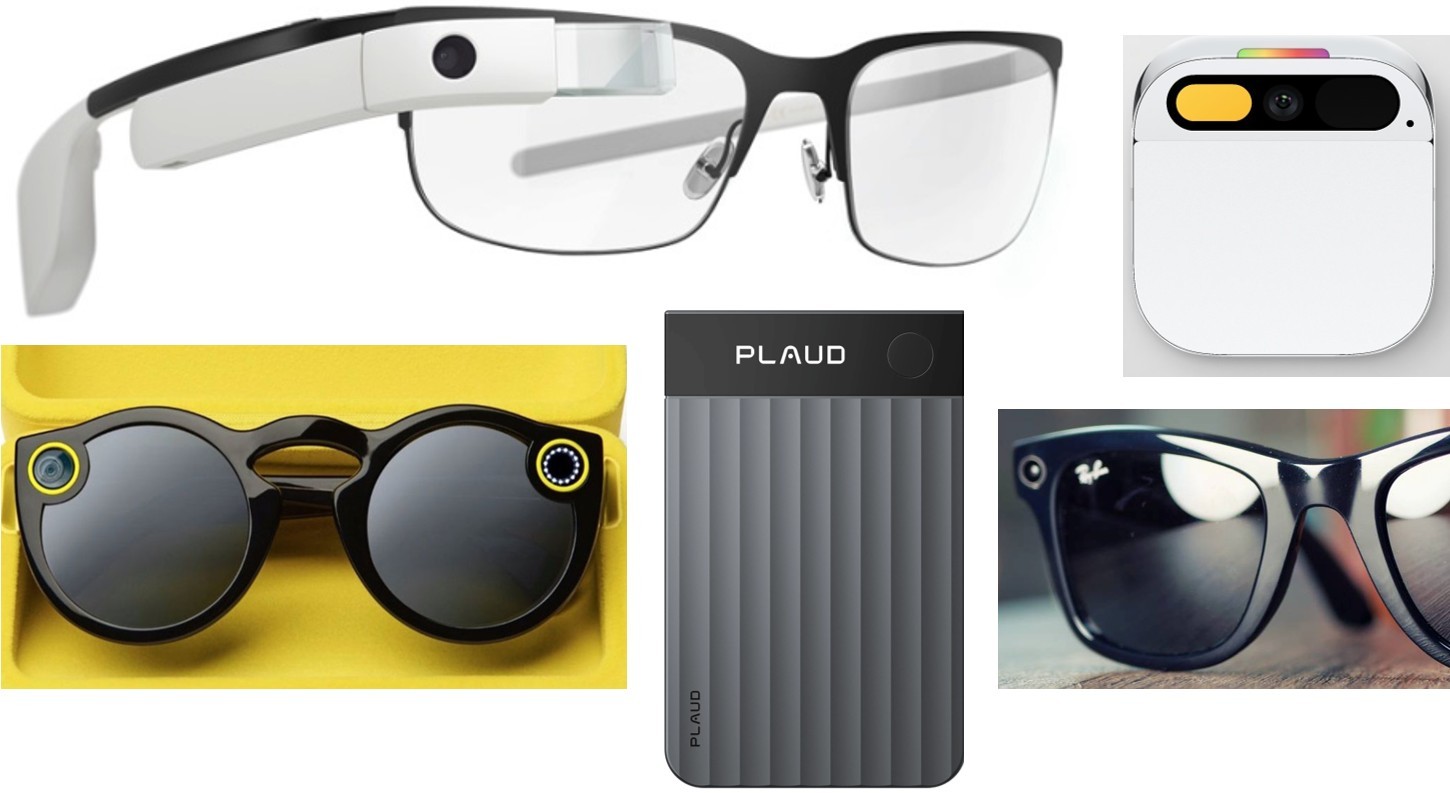
While emerging technologies can capture the rich texture of daily life and provide deeply impactful insights, and even personalized coaching, the experience is by no means yet commonplace. There are certainly some days where being early can feel to us indistinguishable from just being wrong. Indeed, the trail of failed product launches, like Google Glass, Snapchat’s Spectacles and Humane’s AI Pin, make it easy to conclude that consumers will never adopt wearable devices that blend into life and augment it. But, it is also possible that the ecosystem, the models, and cultural norms just simply weren’t yet there. Recently, it feels as though something has shifted.
Meta’s Ray-Ban smart glasses didn’t just launch — they sold out. Amazon’s acquisition of Bee signaled conviction that continuous capture and ambient AI are not fringe experiments but foundational platforms. Products like Plaud, which passively record and summarize conversations, are finding real traction. There has not yet been an “iPhone moment,” but it is undeniable that we are heading towards a world where people will come to expect insights and feedback on how they operate in their personal and professional lives.
What is driving the shift?
First, AI models became good enough. Summarization, pattern detection, coaching, contextual understanding — these aren’t science experiments anymore. They’re usable. We are lightyears away from the world of 2012 into which Google Glass launched.
Second, hardware is increasingly socially acceptable. When devices look like normal glasses or sit invisibly in your pocket, adoption friction drops dramatically. Look no further than the Oura Ring, or the countless smart watches that are truly everyday parts of peoples’ wardrobes.
Third, the cultural contract around data continues to evolve. People have for years documented their lives through photos, voice notes, fitness trackers, and digital exhaust. The leap from “capturing moments” to “learning from moments” is commonplace now. Indeed, by most accounts, the Humane AI Pin didn’t fail because of cultural challenges, it failed because the hardware simply didn’t work.
It will likely be years of hard-fought battles in the consumer marketplace before a winner truly emerges with the right consumer tech form factor. But, that should not, and will not, stop businesses from adopting consumer-grade ambient technology to improve operations. Retail will always take its broad queue from the marketplace, but won’t wait until the dust settles. It was not that long ago that many retailers adopted tablets in their stores. At the time, iPads were too expensive, and other tablets were not yet as clever. Retailers didn’t wait, they adopted what they could make work, and got on with it. Today the iPad is the prevailing winner, but retailers didn’t need to know that to move as they did.
Burger King’s announcement of “Patty” — an AI-enabled system designed to improve operational execution — is a signal flare for what we are doing at Ethosphere. It marks the beginning of something bigger: broad consumer hardware expectations crossing into enterprise applications. The same technologies individuals use to optimize their lives will increasingly be used by businesses to optimize their performance. Ethosphere’s moment is rapidly arriving.
As retail environments change for frontline employees, businesses have a serious responsibility to ensure that technologies that capture daily life do so with clear moral and ethical purpose. Without clear principles, insights for growth and development are just a few degrees away from employee surveillance. The wearable device moment is accelerating, making it important that builders and operators adopt these technologies with clarity around their principles. A few foundational ideas Ethosphere keeps always front of mind as we build:
Augment, Don’t Replace.
Technology should make humans better at being human. In retail, that means better listeners, better storytellers, better problem-solvers — not scripted robots.Coaching Over Policing.
If captured data is used primarily for punishment, adoption will stall and culture will erode. The goal must be growth, learning, confidence, targeted at ultimately achieving mastery in performance.Consent and Clarity.
People need to understand when and how data is being captured, how it’s used, and how it benefits them. Trust compounds; secrecy corrodes.Elevate the Frontline.
The individuals closest to the customer should gain the most value. Technology should give them superpowers, not extract value from them.
There are still unknowns. Regulation will evolve. Social norms will shift. Some experiments will fail. But the trajectory is clear: ambient, AI-powered hardware is becoming part of everyday life — and increasingly, everyday business.
Ethosphere may still prove to have been early. But, increasingly, we find ourselves meeting a moment we knew was coming. If we build thoughtfully — with conviction, humility, and principled guardrails — we’ll help shape the future.